Why Your Brain Craves Academic Mastery: The Hidden Psychology
Every time you solve a complex academic problem, your brain releases dopamine—the same neurotransmitter associated with eating chocolate, listening to music, or achieving a personal goal. This isn't coincidental; it's evolutionary.
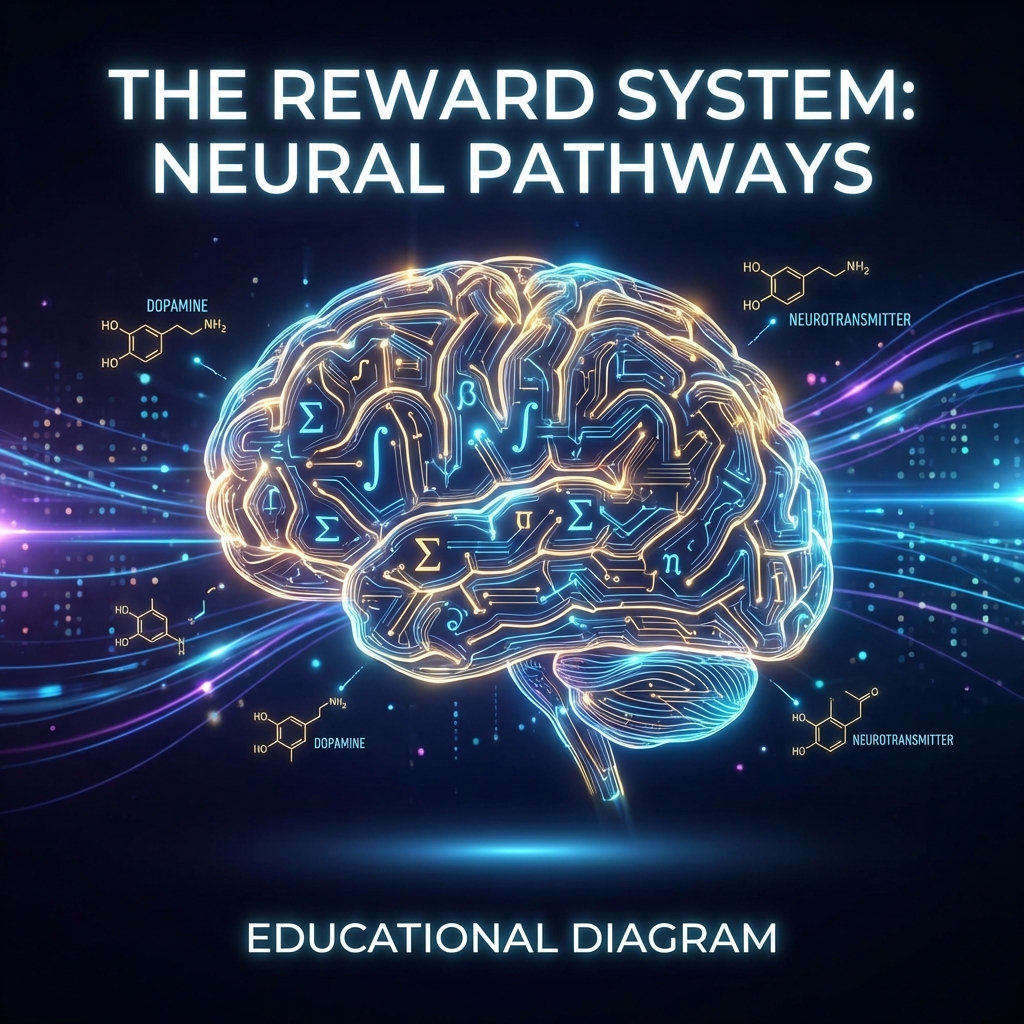
Mathematics activates the brain's reward centers in ways few other activities can match. When you crack a difficult equation or suddenly understand a complex concept, your prefrontal cortex lights up like a Christmas tree on an fMRI scan.
Pattern Recognition: Your Brain's Favorite Game
Humans are pattern-recognition machines. Our ancestors survived by identifying patterns—predator tracks, seasonal changes, social hierarchies. Complex subjects like Chemistry, Physics, and Advanced Mathematics are the ultimate pattern playgrounds.
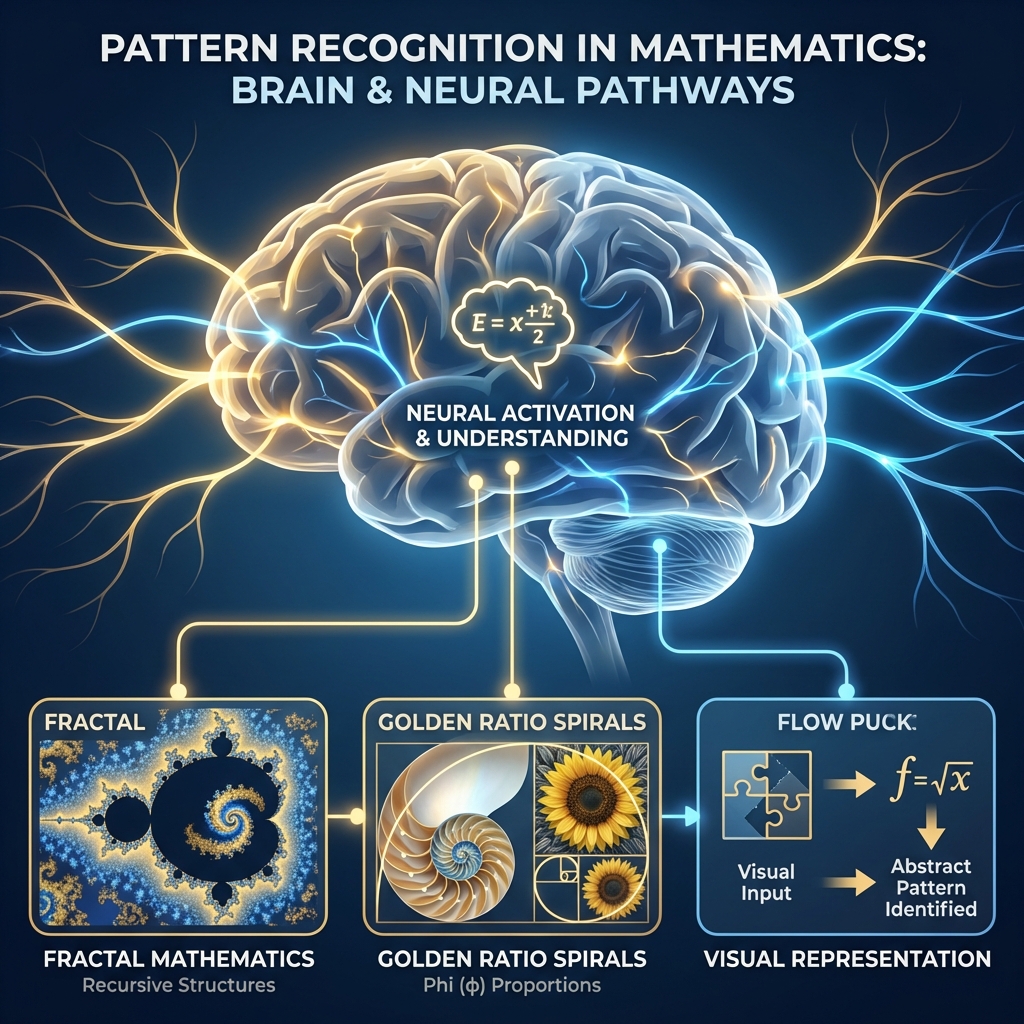
When you work through difficult concepts, you're engaging the same neural pathways that helped early humans survive. This is why solving an algebra equation or balancing a complex chemical reaction can feel as satisfying as completing a puzzle or winning a game.
The Flow State Connection
Psychologist Mihaly Csikszentmihalyi discovered that mathematics is one of the easiest pathways to achieving "flow"—that optimal state where challenge meets skill level perfectly. Time disappears. Self-consciousness vanishes. Pure engagement remains.
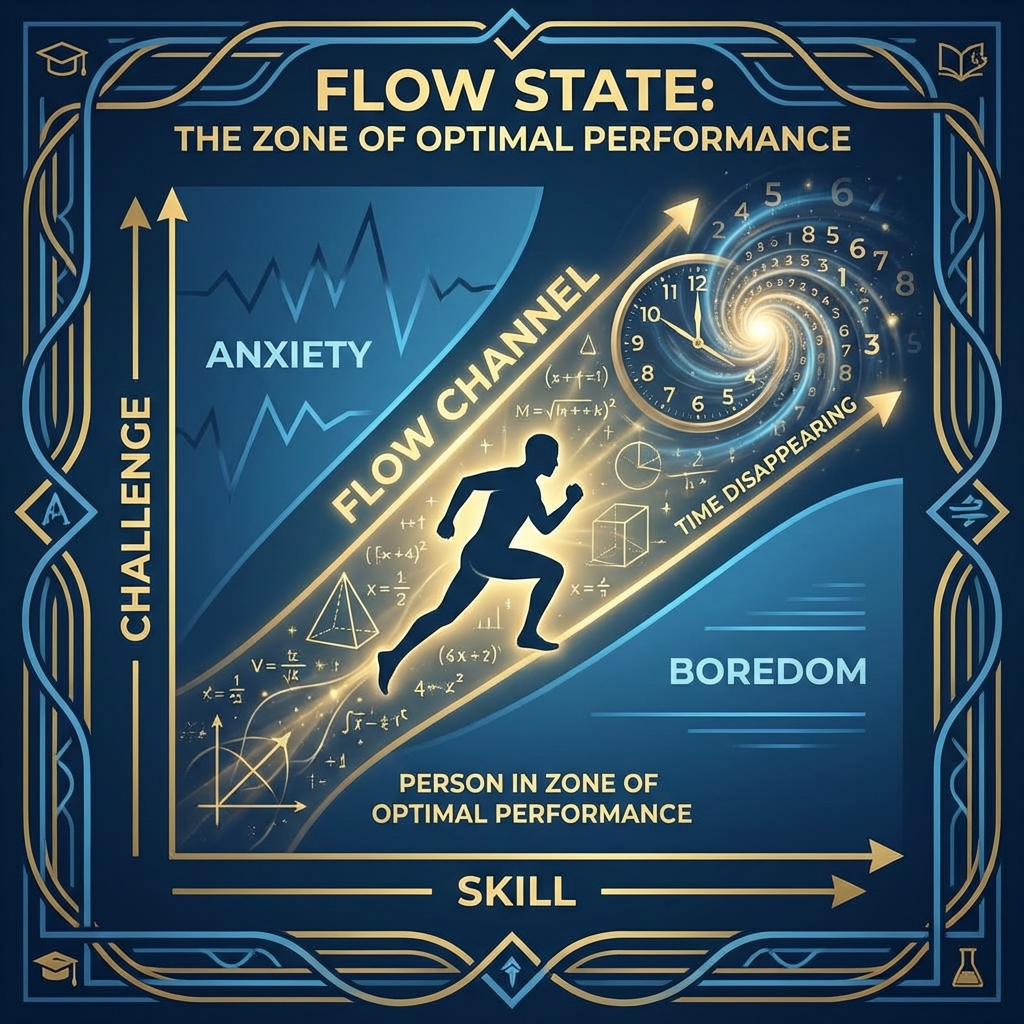
This state isn't just pleasurable; it's transformative. Research shows that regular flow experiences correlate with higher life satisfaction, better performance, and enhanced creativity across all domains.
Building Executive Function
Mathematics strengthens your brain's executive functions—working memory, cognitive flexibility, and inhibitory control. These are the same skills that separate high performers from average ones in every field.
Think of math practice as gym sessions for your brain's CEO. Every problem solved is a rep that builds mental muscle.
The Addiction Mechanism
Here's the fascinating part: the brain's reward system creates a positive feedback loop. Success in mathematics → dopamine release → motivation to do more mathematics → improved skills → more success.
This is why students who experience early mathematical success often develop a lifelong love for logical thinking. It's not talent—it's neurology.
Practical Application
Understanding this psychology allows you to hack your own learning:
- Start Small: Begin with problems slightly above your current level to trigger dopamine without triggering frustration
- Celebrate Wins: Consciously acknowledge each solved problem to reinforce the reward pathway
- Create Streaks: Daily practice compounds the neurological benefits
- Seek Flow: Find the sweet spot where problems are challenging but achievable
Your brain wants to love mathematics. It's designed for it. The question isn't whether you can enjoy math—it's whether you'll give your brain permission to experience the natural high it provides.
Frequently Asked Questions
What is the most effective way to master Why Your Brain Craves Academic Mastery: The Hidden Psychology?
Focus on first-principles understanding before memorizing procedural steps, test yourself with closed-book active recall, and calibrate your working against official Cambridge, Edexcel, IB, or AP mark schemes.
How often should students practice past-paper questions on this topic?
Use spaced repetition across expanding intervals (Day 1, Day 3, Day 7, Day 21) and complete timed exam-style problems weekly to build retrieval speed under exam conditions.
Where can I get 24/7 Socratic tutoring and instant exam grading for this subject?
Thula Academy's 6-Pillar Virtual Campus provides interactive Socratic lessons in Topic Studio, 10-second custom exam generation in The Architect, and 60-second handwriting grading in Exam Corner across 30+ subjects.