Future-Proof Your Career: 5 Skills AI Can't Replace by 2030
We are living through the most profound shift in the global knowledge economy since the Industrial Revolution. Large language models and automated reasoning engines can now generate boilerplate code, summarize legal briefs, and solve routine textbook exercises in seconds. For students preparing for IGCSEs, A-Levels, the IB Diploma, or university degrees, a critical question looms: What skills will still command a premium in 2030 and beyond?
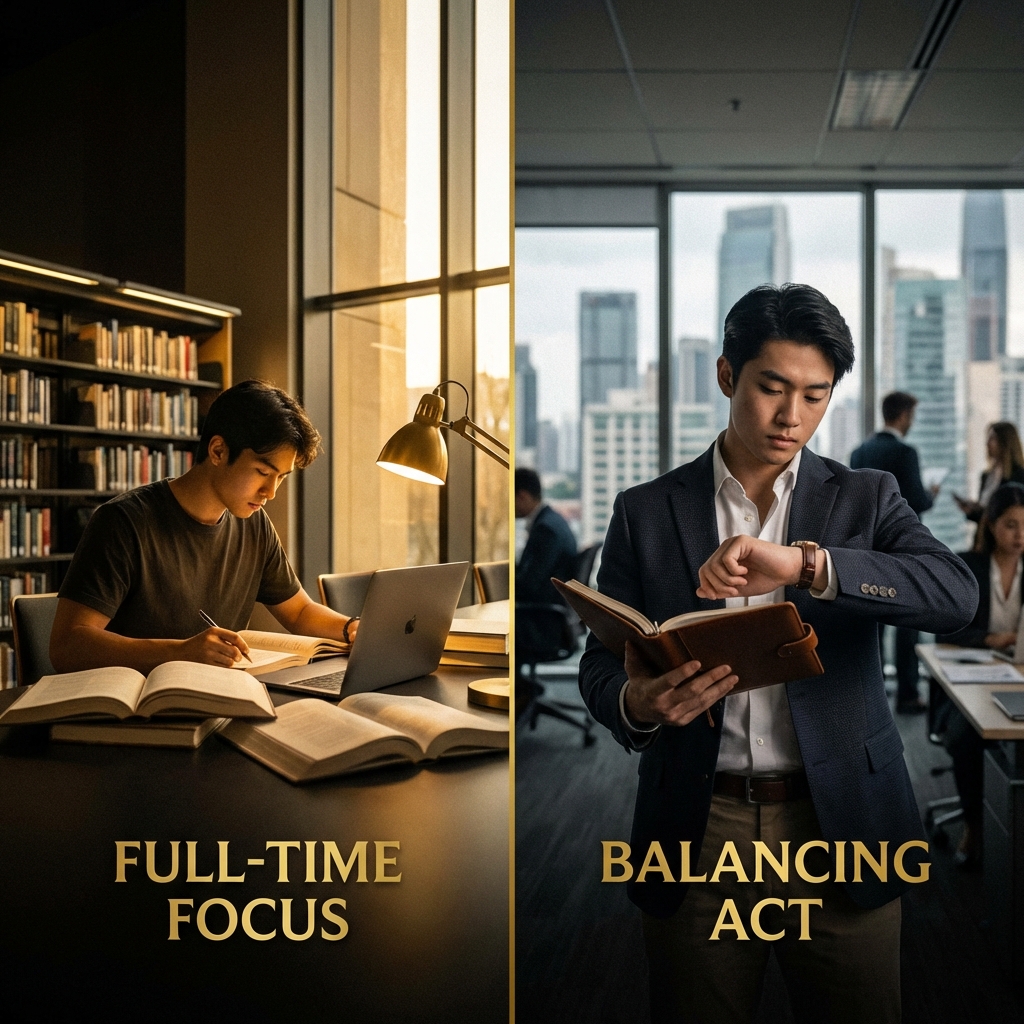
According to the World Economic Forum's Future of Jobs Report and labor economists at MIT, AI does not eliminate the need for deep domain expertise—it eliminates shallow procedural work while massively increasing the return on First-Principles Judgment.
The 5 AI-Proof Meta-Skills Every Ambitious Student Must Build
1. First-Principles Mathematical & Causal Modeling
AI models are fundamentally probabilistic pattern matchers—they predict plausible next tokens based on historical training distributions. When faced with a novel physical constraint, an unprecedented market regime, or a subtle boundary condition, statistical correlation breaks down. Students who master Mathematics, Physics, and Economics from first principles possess causal models of reality that allow them to architect and audit complex systems.
2. Problem Formulation & Epistemic Precision
In school exams, the question is handed to you neatly formatted. In quantitative research, medicine, engineering, and strategy, 80% of the breakthrough lies in translating a messy, ambiguous real-world crisis into a solvable formal model. Knowing which variables matter, which assumptions are hidden, and which statistical test is valid cannot be outsourced.
3. Verification Literacy & Hallucination Auditing
An AI can produce a 10-page derivation or financial model that looks 99% convincing while containing a fatal sign error or survivorship bias in line 4. Only a human with deep internal fluency in calculus, statistics, and domain logic can spot the flaw in 30 seconds. Without internal knowledge in your own long-term memory, you cannot evaluate external intelligence.
4. Cross-Disciplinary Synthesis
The highest-impact breakthroughs of the next decade sit at the intersection of disciplines: computational biology (Biology + Statistics + CS), climate tech (Thermodynamics + Electrochemistry + Macroeconomics), and neuro-engineering. Studying a rigorous combination of STEM and analytical humanities builds a multidimensional perspective no narrow specialist can match.
5. High-Stakes Persuasive & Ethical Leadership
Capital allocation, medical ethics, scientific peer defense, and organizational leadership require human accountability, empathy, and crystal-clear verbal reasoning. The ability to defend a complex analytical thesis on a whiteboard under live questioning remains the ultimate career differentiator.
How to Train Like a 2030 Leader Today
Stop using passive study habits that train you to be a second-rate calculator. Inside Thula Academy's 6-Pillar Virtual Campus, our Socratic learning engine never hands you a shortcut answer—it challenges your assumptions, forces you to prove your understanding before advancing, and trains the exact analytical resilience that top universities and employers reward. Start your 21-day free trial today.
Frequently Asked Questions
Which academic subjects are most resilient to AI automation by 2030?
Subjects that train rigorous causal modeling and formal verification—such as Mathematics, Further Maths, Physics, Chemistry, Economics, and Computer Science—become more valuable in the AI era because AI systems require human architects who can verify mathematical truth and spot subtle logical hallucinations.
Why do students still need to learn calculus, statistics, and writing if AI can solve problems?
You cannot audit an AI output if you do not understand the underlying mechanics. In engineering, medicine, finance, and law, professionals are paid for high-stakes judgment when standard patterns fail—which requires deep internal mental models built through rigorous study.
What is the difference between using AI as a crutch versus a cognitive amplifier?
Using AI to copy homework answers causes cognitive atrophy. Using Socratic AI (like Thula Academy’s Topic Studio) that refuses to give away the final answer and instead questions your reasoning builds stronger neural pathways than passive textbook reading.