Inside Thula Academy — Exam Corner: Sunday, October 4
The Sunday Before Exams — And Why Most Students Are Preparing All Wrong
It's Sunday afternoon. October. A Year 12 student somewhere in Victoria has their Mathematical Methods notes spread across the kitchen table, three browser tabs open with past VCE papers, a half-eaten bowl of cereal from this morning, and absolutely no idea whether they're actually ready for the exam or just feeling ready. Those are very different things. I've watched this scene play out more times than I can count — students who've put in the hours but can't tell you, honestly, where they stand. Not because they haven't worked hard. But because they've had no real way to track it.
That's the problem Exam Corner was built to solve.
What Exam Corner Actually Is (And Why It's Different)
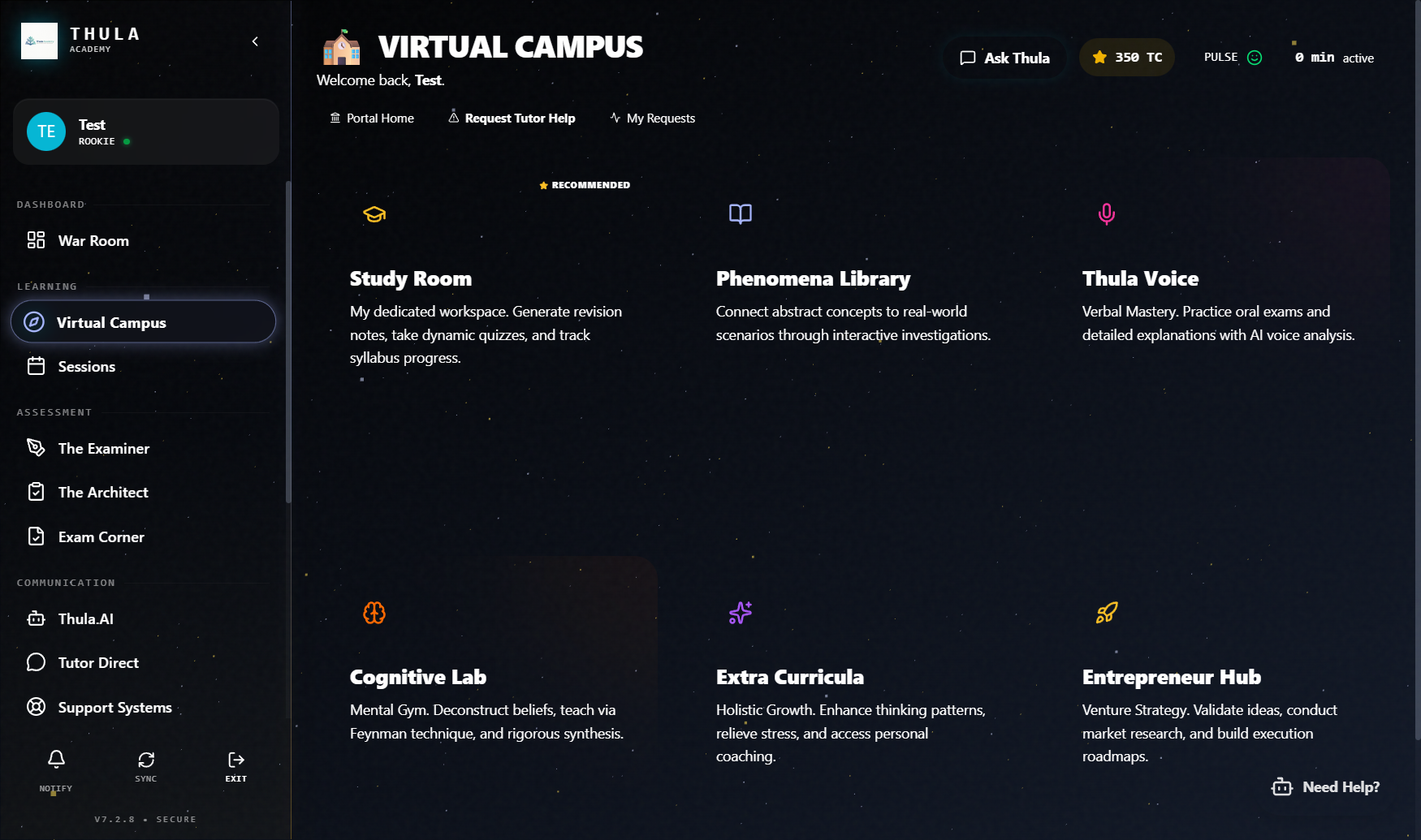
Exam Corner is Thula Academy's centralised exam hub — the place where students take tests, see their results, and track their entire exam journey in one organised space. Not scattered across emails and PDF downloads. Not buried in a folder on their desktop that they'll never find again. One place. Everything in there.
But here's what makes it more than just a "results page" — it's designed to show you your journey over time. Which topics you're consistently nailing. Which ones you keep dropping marks on at the same point, the same type of question, every single time. That pattern-spotting is the thing that changes how a student studies, and honestly, it's what separates students who improve rapidly from the ones who stay stuck at the same mark for months.
For students chasing a high ATAR — whether you're sitting VCE in Victoria, HSC in New South Wales, or working through an IB or A-Level programme — knowing your weak spots precisely is worth more than ten hours of general revision. Ten hours of the right revision changes everything.
A Real Sunday Session: How One Student Used Exam Corner
Let me walk you through what a session actually looks like, because I think it makes it real in a way that a feature list never does.
Imagine a student — let's call her Priya. She's a Year 12 student in Melbourne, preparing for VCE Specialist Maths. She logs into Thula Academy on a Sunday morning (October 4, as it happens) with about two hours to study. In the past, she would've opened a past paper, done it semi-seriously at the kitchen table, and then marked it herself — underestimating where she went wrong because self-marking is notoriously unreliable when you already know what the answer should be.
Instead, she heads to Exam Corner. She can see all the exams she's taken over the past six weeks — the scores, the dates, the topics covered. At a glance, she can see that she's improved steadily in calculus but that her results in complex numbers have been all over the place. Not declining. Not improving. Just inconsistent — which is actually its own kind of warning sign, because inconsistency usually means conceptual gaps, not just practice gaps.
When the Data Tells You Something Your Gut Wouldn't
She clicks into her most recent exam. The breakdown shows her score question by question, and there's a clear cluster of dropped marks around one specific type of problem — modulus-argument form. Every time. She'd been vaguely aware something was off in that area, but seeing it mapped out like that made it undeniable. And undeniable is useful. Undeniable means you actually do something about it.
She books a session with her Specialist Maths tutor through the platform, goes into the Study Room, and they spend 40 minutes specifically on modulus-argument form — not a general "let's go over complex numbers" session, but a targeted, focused session on the exact thing the data flagged. That's what personalised education looks like in practice. Not a vague sense that "I should revise complex numbers," but a specific, evidence-based decision about exactly what to fix and when.
If you're looking for that kind of smart, adaptive support, try our free study tools to get a feel for how the platform works before committing to anything.
The Insight That Most Students (and Even Some Tutors) Miss
Here's something I don't think gets said enough: the biggest risk in exam preparation isn't that students don't work hard enough. It's that they work hard on the wrong things, and they never find out until the real exam. That's genuinely heartbreaking when you see it happen — a student who put in 200+ hours over the year, but spent too much of it reinforcing what they already knew because it felt productive.
Exam tracking — real tracking, with actual data — breaks that cycle. It makes the invisible visible. And once you can see it, you can fix it.
This is why Exam Corner isn't just a convenience feature. For a student targeting a 90+ ATAR, or trying to secure entry into a competitive degree at Melbourne Uni, UNSW, or Monash, the difference between a 78 and an 85 often comes down to three or four specific skills that needed targeted attention in October. Not more hours. More precise hours.
What Students Find When They Actually Sit Down With It
A few things tend to surprise students when they start using Exam Corner properly:
- They've improved more than they thought. When you can actually see your scores over time, you often realise that your October self is meaningfully better than your August self — even when it doesn't feel that way.
- Their weak topics are usually not what they assumed. Most students can tell you roughly what they're bad at, but the specifics are almost always more precise than their gut feeling. It's rarely "I'm bad at statistics" — it's "I drop marks specifically on conditional probability questions with two-way tables."
- Consistency matters more than peak performance. A student who scores 72, 74, 71, 73 on four practice exams is in a better position than someone who swings between 65 and 84, even though their averages might be similar. Reliability is what you want going into an exam room.
These aren't small observations. They change how you prepare — and when you're preparing for something as high-stakes as VCE or HSC, changing how you prepare can genuinely change your outcome.
It Fits Into the Bigger Picture of How Thula Works
Exam Corner doesn't sit in isolation. It connects to everything else on the platform — the Topic Studio where students work through concepts, the War Room for intensive exam-period cramming sessions, the Study Room for live tutor sessions. Think of it as the feedback loop that makes everything else smarter. You study a topic in the Topic Studio, you test yourself in Exam Corner, the results tell you what to go back and revisit, and your online tutor can see exactly where to focus in your next session.
That kind of joined-up, intelligent approach to learning is what makes the platform feel different from just booking a random tutor on the internet. And if you're curious about what a full subscription looks like, you can explore our tutoring plans — there's a range of options depending on how much support you need between now and your exams.
For Students Sitting Exams in the Coming Weeks
If you're a Year 12 student in Australia — VCE, HSC, or otherwise — and you're heading into exam season, the single best thing you can do right now is get honest with yourself about where the gaps actually are. Not where you think they are. Where the data says they are.
That takes some humility. It means looking at a result you'd rather not look at and sitting with it long enough to understand it. But that's the work. And Exam Corner makes that work a lot less painful, because at least you're looking at clear information rather than trying to guess.
If you haven't used it yet — or you're not on Thula Academy yet — you can start your free 21-day trial and see how it feels to actually know where you stand before exam day, not after.
Priya, by the way, sat her Specialist Maths exam three weeks after that Sunday session. She said afterwards that the modulus-argument questions felt, for the first time, like questions she'd met before — not because she'd seen that exact question, but because she'd actually closed the gap. That's what this is all about, really. Not the technology. Not the platform. Just a student walking into an exam room feeling genuinely ready. That's the thing worth building for.
```

 Sri Lanka
 United Kingdom
 Australia
 Ireland
 Germany
 UAE
UAE Singapore
 USA
USA